01 /
Opening
Explain
A daughter is not a price.
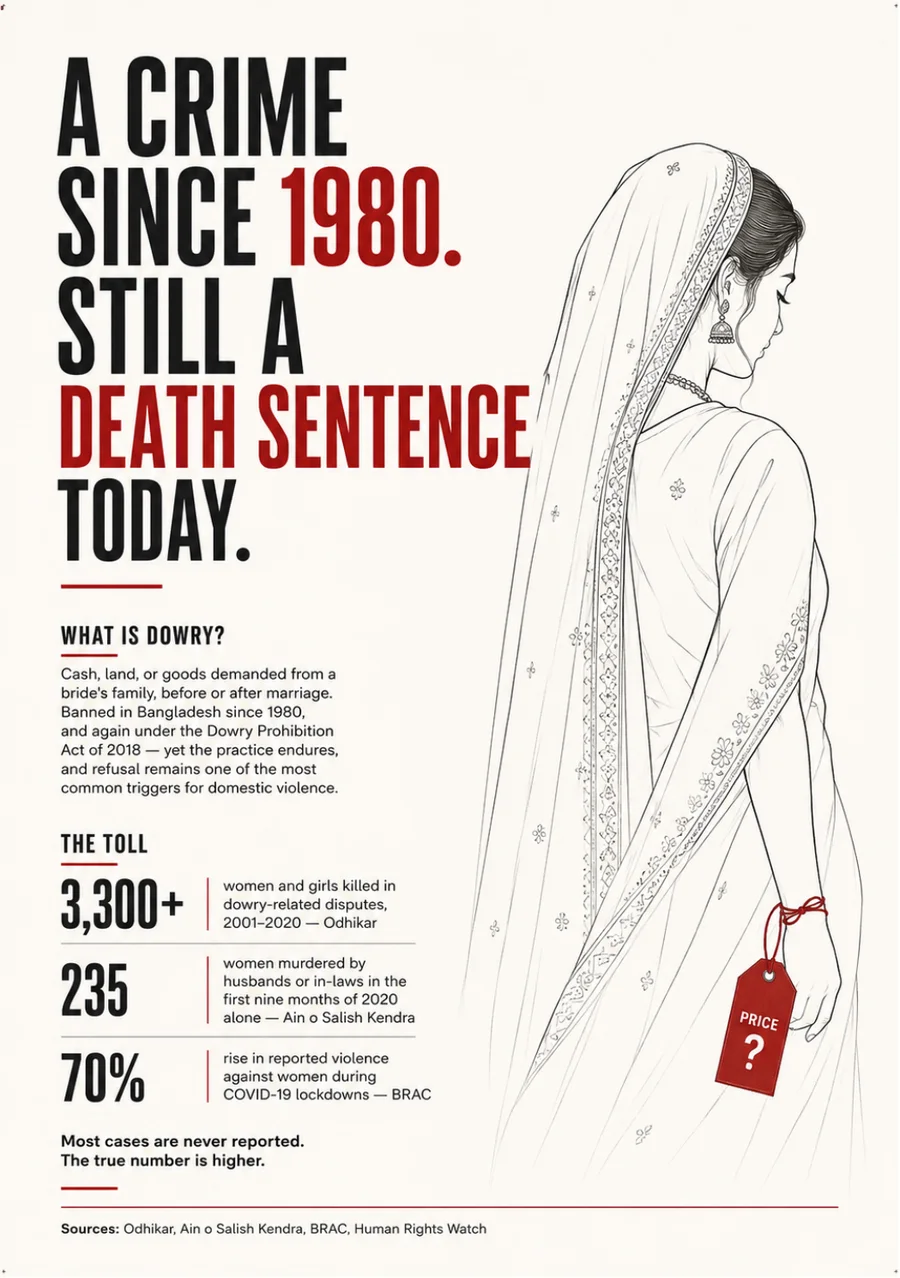
NotPrice is a Bangladesh-focused public evidence project about dowry pressure, the harm it creates, and the verified routes people can support.
Law and survey evidence:
Act
Support verified legal aid, crisis response, shelter referral, and survivor services. If you need help now, use the verified numbers shown here.
Need help now?
If there is immediate danger, call 999. For violence against women and children, 109 is a verified national entry point. For legal-aid information, 16699 is the government legal-aid helpline.
If using this site could put you at risk, close it and use a safer phone or trusted person.
Survivor support organization with official donation routes.
Last verified: 2026-07-06
Major legal-services organization offering legal aid, litigation, and rights support.
Last verified: 2026-07-06BRAC programme area relevant to legal protection, gender equality, and social empowerment.
Last verified: 2026-07-06
Human-rights organization with legal aid, mediation, rapid response, and gender justice work.
Last verified: 2026-07-06
Women’s rights organization with legal support, violence-resistance work, and shelter-home activity.
Last verified: 2026-07-06
Women lawyers' organization relevant to legal aid, women’s rights, and protection work.
Last verified: 2026-07-06BRAC directory for service information across legal, shelter, health, police, social, and other support routes.
Last verified: 2026-07-06
Dhaka Metropolitan Police unit for women and children support and investigation coordination.
Last verified: 2026-07-06
Human-rights foundation relevant to women’s rights, advocacy, and movement support.
Last verified: 2026-07-06
National emergency number for police, fire, and ambulance response.
Last verified: 2026-07-06
National helpline for violence against women and children.
Last verified: 2026-07-06
Government legal-aid route and national legal-aid helpline.
Last verified: 2026-07-06
Government crisis-centre/cell information under the Ministry of Women and Children Affairs.
Last verified: 2026-07-06These are verified starting points, not guarantees of outcome. Contact details can change, so every card shows a last-verified date.
Act
The leaflet set separates a practical Bangla help card from an English awareness and supporter handout.